

Where to Store Everyday Items So You Don’t Have to Reach, Bend, or Strain

Do you get exhausted in the kitchen and feel as if you’ve done a gym session workout? It could be as simple as you having to constantly keep bending and stretching to reach items, without realizing that’s what you’re doing !

Sometimes, it’s not the cooking that feels difficult – it’s everything around it.
Reaching into high cabinets.
Bending down to low shelves.
Walking back and forth just to find what you need.

Over time, these small movements can make cooking feel much harder than it needs to be.

When I discovered that this was my problem, a few simple changes made a huge difference. Now, I don’t do gym in my kitchen! When I want to workout, I go to the local gym with my best friends and enjoy the session.

A few simple changes to where you store everyday items can make a big difference.

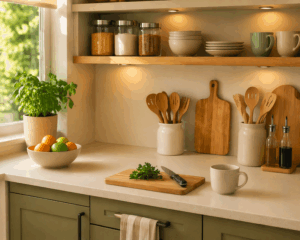
A tidy kitchen counter with a chopping board, mug, and utensils placed at easy-to-reach height for seniors

🟢 Keep Everyday Items Between Waist and Shoulder Height

This is one of the easiest changes you can make.

Try to keep frequently used items:
• between waist and shoulder level
• in places that are easy to see and reach
• close to where you usually prepare food

This reduces the need for stretching, bending, and unnecessary movement.

🟢 Create a “Daily Use” Zone

Instead of spreading items all over the kitchen, bring the essentials together.

Your “daily use” zone might include:
• a chopping board
• a knife
• your favourite mug or bowl
• a few basic ingredients

Keeping these in one place makes cooking feel simpler and more organised.

I also did some soul searching on what to keep on my kitchen counter. This makes such a difference. My counter was cluttered with all sorts of things that I hardly use and just got in the way. After a clean up, the whole area felt fresh and new.

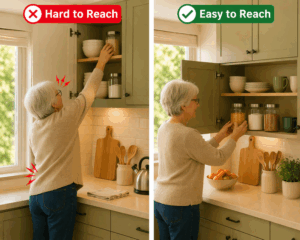
🟢 Move the Most Used Items Up (and the Least Used Down)

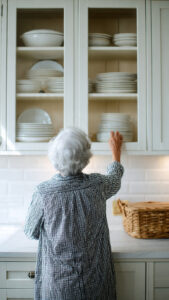
Split image showing an older woman struggling to reach a high kitchen shelf and easily reaching items at a comfortable height

Not everything needs to be within easy reach – just the things you use often.

A simple rule:
• Everyday items → easy-to-reach shelves or counter
• Occasionally used items → lower or higher storage

This way, you’re not constantly reaching or bending for the same things.

🔴 Avoid Low Cabinets Where Possible

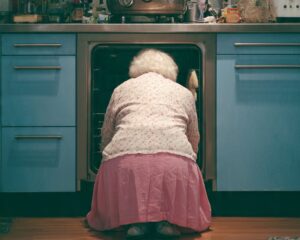
bending down can cause strain for the elderly

Low cabinets often mean:
• bending down
• holding awkward positions
• extra strain on your back or knees

If possible:
• move frequently used items out of low cabinets
• use them only for rarely used items

I used to get back ache after cooking, and then I realized that the bending down and lifting heavy appliances out of low cabinets was causing the problem. It’s a real issue.

Those lower cabinets (and very high cabinets) became more trouble than they were worth for everyday use – I found myself avoiding them unless I really had to. I now use them for items that I use very seldom. Or, in some cases, I use them for storage of items that need a place to be, but are never used. One day, I’ll get to doing a revamp and donate or dump them. But not quite yet!

🟢 Keep Your Counter Clear - But Useful

brightly lit kitchen helps seniors when cooking

A completely empty counter isn’t always helpful.
Instead:
• keep a few useful, everyday items on the counter
• avoid clutter that gets in the way
• aim for a balance between clear and practical

If you use it everyday, there’s no reason to keep packing it away and taking it out again and again.
Here are some small kitchen changes you can make to improve counter space and make it less stressful and less hard work!

🔴 Reduce Unnecessary Movement

storing kitchen essentials high up can be a strain for elderly people

I didn’t realise how much time I was spending reaching and bending until I started noticing how often I had to go back and forth just to get one or two things.

The goal is simple:
Fewer steps
Less reaching
Less bending

Think about your usual routine and ask:
• What do I use every day?
• Where do I naturally stand or sit?
• What could be closer?

🌿 A Gentle Reminder

I used to keep things wherever they fit, but once I moved everyday items to easier spots, it made a bigger difference than I expected.
You don’t need to reorganise your whole kitchen.

Start with just a few items:
• your most-used utensils
• your favourite mug
• one or two ingredients

Even small changes can make cooking feel more comfortable and manageable.

🧾 Simple Setup Checklist

• Keep everyday items at waist-to-shoulder height
• Create a small “daily use” zone
• Move frequently used items within easy reach
• Avoid using low cabinets for daily items
• Reduce unnecessary movement in your routine

I’ve found that when everything is easier to reach, the kitchen feels less like a place of effort and more like a place I actually enjoy spending time in again.

🔗 Helpful Next Steps

You might also find these helpful:
 
 
Have any ideas to help others? You can message me on Facebook or send a mail to appliancegranny@gmail.com. Look forward to hearing from you! 
 
If you are a caregiver or looking after an elderly person, here is a helpful article on Growing Older At Home from the NIH National Institute on Aging 

Frequently Asked Questions

1. Where should I store everyday kitchen items?

Keep them between waist and shoulder height where they are easy to reach and see.

2. What is a “daily use” zone in the kitchen?

It’s a small area where you keep the items you use most often, so everything is within easy reach.

3. Why should I avoid low cabinets?

They require bending and can put strain on your back and knees, especially when used frequently.

4. Should I keep things on the counter?

Yes, but only a few useful items. Keep the space clear but practical.

5. How do I make my kitchen easier to use?

Reduce reaching, bending, and walking by placing frequently used items in convenient, easy-to-reach spots.
Madlyn Appliance Granny

Written by Appliance Granny – Madlyn is a tech-savvy senior with 30+ years of experience running an IT business. She combines her love of cooking and family with a mission to make kitchens safer, simpler, and more joyful for seniors.