
A grandmother and granddaughter happily whisking batter together in the kitchen!
Cooking with your grandkids is one of life’s sweetest joys. It’s a wonderful way to share family recipes, teach life skills, and make precious memories across generations.
At the same time, it’s natural for grandparents to worry about safety or messes. The good news is, with a little preparation and a dash of patience, you can confidently welcome even the littlest helpers into the kitchen.
According to experts, cooking together teaches children a skill for life, strengthens the bond between grandparent and grandchild, and creates happy experiences families can share.
In this guide, I’ll walk you through practical tips I use to keep kitchen adventures safe, simple, and filled with joy for everyone involved.
Getting Ready: Set Up a Safe, Simple Cooking Environment
Before you even preheat the oven or crack an egg, take a moment to prepare your kitchen for little helpers. A safe setup will make you feel more confident and prevent accidents before they can happen. Here are some preparation tips:
Childproof the space:
If your grandchildren are young, secure any hazards in advance. Move sharp knives, heavy pots, and breakable dishes out of reach. Consider using stove knob covers and oven door locks if toddlers are around. You can find more child safety tips here. Also, keep household cleaners or chemicals completely out of reach or in locked cabinets. A quick sweep of the area for choking hazards (like coins or small gadgets) is wise too.
Clear the “cook zone”:
Create an uncluttered workspace where you and the kids will cook. Wipe down and sanitize countertops (a clean surface is safer for food prep). Remove any unnecessary appliances or decor that could get knocked over. Ensure walkways are clear of tripping hazards (like loose rugs or toys) – both grandparents and kids should have sturdy footing.
Gather kid-friendly tools: Set out equipment that will help children participate safely. For example, have a sturdy, non-slip step stool ready so they can reach the counter safely. Use kid-safe utensils where possible – think of silicone or plastic mixing spoons, and child-safe knives with rounded edges for older kids to practice. Kid-sized aprons and oven mitts can make them feel included and keep clothes clean and little hands.
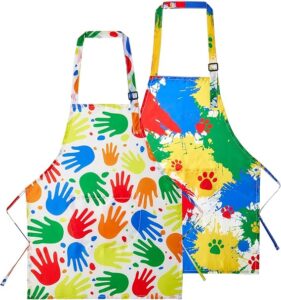
I love these kids aprons. the colors are suitable for both girls and boys and they don’t cost a fortune!
Mise en place (prep ahead):
How’s my French? OO-LA-LA! Measure ingredients or do a bit of pre-chopping in advance if it makes things easier. For instance, you might pre-measure spices or partially cook harder foods so that the final steps are quick and safe for kids. Having everything organized and within reach means you won’t have to turn your back on the grandchildren to fetch items once you start.
Wash hands (for everyone!):
Begin each cooking session with a hand-washing party. Make it fun by singing a short song (about 20 seconds) while scrubbing with soap and warm water. Clean hands are the first step to kitchen safety – this simple habit helps prevent spreading germs, an especially important step when cooking with kids or for older adults.
By taking these preparatory steps, you set the stage for a smooth and safe cooking experience. A little foresight goes a long way toward preventing mishaps, so you can focus on the fun parts of cooking together.
Grandkids in the Kitchen: Age-Appropriate Tasks and Roles
One key to cooking joyfully with grandchildren is to match the tasks to the child’s age and ability. Giving kids age-appropriate jobs keeps them safe, boosts their confidence, and ensures they (and you) don’t get frustrated.
Even toddlers can contribute in their own way, while older kids can take on more responsibility. Here are some ideas by age group:
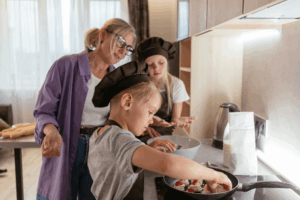
Toddlers (2-4 years old):
The very little ones love to be included, but they need super close supervision and ultra-simple tasks. Let toddlers pour pre-measured ingredients into a bowl, stir batter or dough (expect some splashes!), and sprinkle toppings or decorations on food.
They also enjoy using gadgets like a pastry brush to “paint” butter or oil on bread and vegetables, or pressing cookie cutters into soft dough. Keep tasks no-heat and no-knife at this age. A toddler can also help wash unpeeled veggies or tear up lettuce with clean hands. Be prepared for messes – spills and drips are part of the process, and that’s okay!
Young Children (5-7 years old):
Early elementary-age grandkids have better motor skills and a longer attention span. They can handle slightly more complex jobs with your guidance. For example, kids in this group can crack eggs (you might want to fish out a shell or two, but they’ll be proud they did it). Find out more about the benefits of cooking with your child. They can peel bananas or mandarins, knead or shape dough (great for cookies or meatballs), and mix ingredients in a bowl. With a child-safe knife or even clean kitchen scissors, they can cut soft foods like mushrooms, strawberries, or fresh herbs.
This age group can also start learning to measure ingredients with measuring cups and spoons – it’s like a mini math lesson in the kitchen. Keep emphasizing safety: they should use plastic utensils when possible, and any task involving heat or blades is still off-limits or strictly hand-over-hand with you.
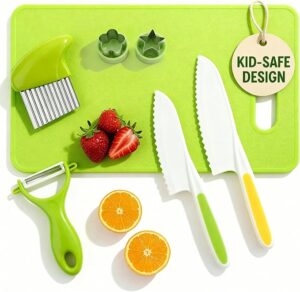
A child-safe cooking set like this takes away all the stress of little ones cutting their fingers! And, they feel so grown-up doing their own prep work.
Older Kids (8-12 years old):
Your preteens or ‘tweens are capable of more advanced kitchen tasks and will love feeling “grown up” as your sous chefs.
Now is a great time to teach knife skills using small, real knives under close supervision – you can show them how to hold a knife properly and use the “claw grip” to protect their fingers while chopping.
They might practice on easy items like slicing zucchini or cheese. Older kids can also measure and level off ingredients accurately, operate simple appliances (like a toaster or blender, with supervision), and read recipes out loud to guide the process. Many in this age range can use a peeler to peel carrots or potatoes and help grate cheese with a safe grater.
They also often enjoy jobs like beating eggs, whisking batter, or pounding chicken fillets flat (with parchment paper on top to avoid splatter). Always assess each child’s maturity and comfort level – if they’re ready, they can even start learning to use the stove or oven with you handling the heavy hot items.

This fun cookbook has over 100 recipes. I use it often with my grandkids and we find everything from cup cakes to breakfast tacos, depending on our mood!
Teenagers:
By the time your grandchild is a teen, they may be quite capable in the kitchen – perhaps even teaching you a few trendy recipes!
Teens can take the lead on many steps: browning ground beef at the stove, chopping veggies with good knife technique, or draining pasta (with oven mitts on and your watchful eye). Treat cooking with teens as a collaborative activity; you might be the advisor while they gain independence.
Still, keep an eye on safety and be available in case they need help with heavy or hot tasks. Cooking together with teens is a fantastic opportunity to chat about life while you work side by side. They’ll appreciate that you trust them with grown-up responsibilities.
Why is matching cooking tasks to age so important?
It keeps kids safe and engaged. As AARP’s family experts note, starting with simple recipes and adding new challenges over time is the trick – always keep in mind what different age groups are capable of doing.
A child who feels useful (but not overwhelmed) will enjoy the experience more. And a grandparent who knows the child’s limits will feel more relaxed. Everyone wins!
Kitchen Safety Rules and Tips for Cooking with Kids
No matter the recipe, safety is the top priority when children are in the kitchen. A safe environment actually makes the experience more fun – you can relax and enjoy the moment when you’ve minimized the risks.
Here are some essential kitchen safety rules and reminders to follow whenever you cook with your grandchildren:
Prevent Burns and Heat Accidents
Establish a “kid-free zone” around hot areas:
Teach young grandkids that the stove, oven, and microwave are off-limits unless they’re actively helping with a task with you. A common rule is to keep a 3-foot distance from the stove for little ones. You can put bright tape on the floor to mark where they should stand.
Turn pot handles inward:
Always turn saucepan and skillet handles toward the back of the stove so no one accidentally knocks them. Use the back burners for cooking when possible. This simple step prevents serious spills and burns from hot liquids.
Use oven mitts and teach kids to do the same:
When handling anything hot – a pot, a cookie sheet, a microwave dish – use proper oven mitts or potholders (not a dish towel). Show older kids how to safely remove a tray from the oven or a bowl from the microwave with mitts on and away from their body to avoid burns.

These oven mitts are made from silicone and are great for boys and girls – so no fighting about who wears what!
Never carry a child and hot food at the same time:
If you need to move a hot pan or drain boiling pasta, make sure your grandchild is in a safe spot or sitting down. Carrying a child (or having one tug at you) while handling hot items is very dangerous.
It’s best to seat little ones in a high chair or at the table when moving hot dishes.
Mind the microwave:
Be cautious with food heated in the microwave, as it can develop hot spots. Teach kids that microwaved food or liquids need a good stir and a minute to cool before tasting.
When removing a lid or plastic wrap from a microwaved dish, open it away from your face and theirs to let steam escape.(Microwaves actually cause more scald injuries than any other kitchen device, so go slow and careful!)
Keep hot items out of reach:
Set aside a safe cooling area on a counter far from the edge, where hot baking sheets or pans can rest. This way a curious kid won’t touch it. Avoid using tablecloths or placemats that hang down – a child might tug on them and pull down something hot by accident.
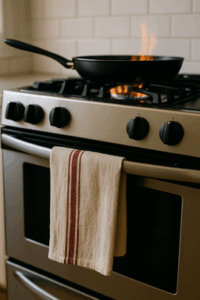
Hanging a dish towel on the oven door might seem convenient, but it can be dangerous – especially with a hot pan nearby.
Towels can catch fire or get pulled down by little hands. It’s safer to keep fabric items well away from heat sources and store them on a nearby hook instead.
Being vigilant about heat sources will greatly reduce the risk of burns. If an accident does happen despite precautions – for example, a minor burn – stay calm.
Get the burned area under cool (not icy) running water, and follow first aid guidelines. But with these steps, you’re well on your way to preventing those panicked moments and keeping cooking time ouch-free.
Here’s more info on dealing with burns in kitchen.
Knife and Sharp Object Safety
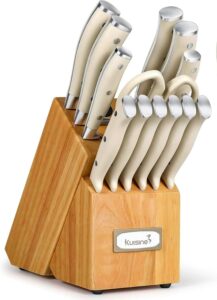
I only use sharp knives with my older grandkids. A block like this makes it much safer to retrieve knives, Kids don’t have to reach into a drawer where they can risk cutting their fingers!
Store knives safely and out of reach:
Before the grandkids arrive, ensure all sharp knives are secured in a drawer with a child-proof latch or placed high up. Even dishware like peelers, graters, and blender blades should be out of sight of curious little hands. If you set a knife down during cooking, put it well back from the counter’s edge.
Introduce knives at the right age and ability:
Only older children (usually around 5-7 years and up, depending on maturity) should handle a knife, and only under close supervision.
Start them off with a dull butter knife or a special child-safe knife. Show them how to hold the knife properly and cut away from themselves on a stable surface. Emphasize that knives are tools, not toys – they should never play around with any sharp object.
Use the “claw” grip and other safe techniques:
Teach kids who are learning to chop to curl their fingers under (like a claw) on the hand that’s holding the food. This keeps fingertips safe from the blade. Go slowly, and consider placing your hand over theirs to guide the first few cuts. Also, remind them to never try to catch a falling knife – just step back and let it fall to the ground.
Keep your eyes on the task:
Whether it’s you slicing an onion or your grandchild slicing a banana, make sure all attention is on that task. It’s easy to get distracted by storytelling (which is part of the fun) – but pause cutting if you need to look away to answer a question. Modeling this focus teaches kids that sharp tools demand respect and full attention.
Safely dispose of and clean sharp objects:
If a recipe involves opened cans (with sharp lids) or broken glass, carefully dispose of those hazards immediately in a trash that kids can’t get into. For cleanup, avoid leaving sharp knives or blades hidden in soapy dishwater where someone might reach in blindly.
Hand-wash knives separately and store them promptly. And of course, never leave a knife lying around unattended – even a moment on the counter could end with a young explorer grabbing it.
By handling sharp tools thoughtfully, you build a safe environment and also teach your grandkids lifelong kitchen respect. They’ll learn that careful habits (like proper grip and paying attention) are just as important as the cooking itself.
Cleanliness, Food Safety, and Clean-Up Fun
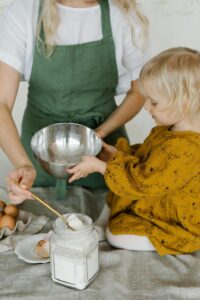
Wash hands and surfaces often:
We mentioned washing hands before starting, but it bears repeating throughout the process. After handling raw eggs, raw meat, or anything sticky, make it a habit for both you and the kids to wash up again. Keeping hands clean prevents spreading germs – an important step since older adults are more susceptible to foodborne illnesses.
Wipe down cutting boards and counters between steps, especially if raw meat was on them. This instills good food hygiene practices in your grandkids.
“Clean, Separate, Cook, Chill”:
Follow the four basic food safety rules that experts recommend.
In simple terms: Clean hands and surfaces; Separate raw meats from other foods to avoid cross-contamination (for example, give kids non-meat tasks while you handle the raw chicken); Cook foods to proper temperatures (make sure meats are fully done, perhaps using a food thermometer if you have one); and Chill leftovers promptly.
If you’re baking together, remind kids not to lick the spoon if the batter contains raw eggs, no matter how tempting – wait until after it’s baked to enjoy. These habits keep everyone safe and healthy.
Tidy as you go:
This is my fave tip! Tidy…Tidy… Tidy as you go. It makes everything so much easier.
A cluttered, messy workspace can lead to spills or accidents. Encourage kids to help clean up small messes as you work. If something spills on the floor, involve them in wiping it up immediately (make it a game of “find the splatter!”). This prevents slippery spots that could cause grandma or grandchild to take a tumble.
Have a trash bowl on the counter for discarding peels, eggshells, and wrappers – it keeps debris in one place. By the time your dish is in the oven, you’ll have less chaos to deal with.

A trash bin like this is so easy to use. Just hang it over a cabinet door and dump all your refuse as you work.
Make clean-up part of the fun:
After the cooking is done and bellies are full, enlist your grandchild’s help in cleaning the kitchen. Young ones can splash in a sink of warm sudsy water with unbreakable utensils (supervised, of course) – to them it’s like washing a toy. Older kids can dry plastic bowls or wipe the table.
Put on some music and turn clean-up into a continuation of your bonding time. Not only does this save you from doing all the chores solo, but it also teaches the kids responsibility and that cooking includes cleaning.
Don’t worry if the cleaning isn’t perfect – heap on praise for their help and make it joyful.
Hygiene reminders:
Teach simple but crucial hygiene habits: use a clean spoon for tasting (no double-dipping), sneeze or cough away from the food (and then wash hands), and keep long hair tied back.
Also, remind them not to touch hot or raw items and then touch their face or other surfaces. These gentle reminders will build their awareness without scaring them.
Staying safe and clean in the kitchen might sound like a lot of rules, but with practice it becomes second nature. By modeling these behaviors, you’re not only preventing accidents and illness – you’re giving your grandchildren lessons they’ll carry into adulthood every time they cook. Safety is a form of love in the kitchen: it shows you care about their well-being.

Cherishing the Moment: Bonding, Patience, and Confidence in the Kitchen
Cooking with your grandchildren isn’t just about following a recipe – it’s about building confidence (for them and for you) and strengthening your special bond. Here are some heartwarming tips to make your time together truly joyful and memorable:
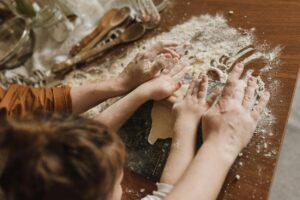
Take it slow and be patient:
Kids will be kids – things might spill, a bit of flour might puff out onto the floor, and not every step will go perfectly. Embrace the perfectly imperfect nature of cooking with little ones. As one baking expert wisely says, “Patience is the key… They’re going to knock things over. They’re going to get eggshells in the batter. It’s fine. It’s totally OK to make a mistake.”
In fact, those little “whoops” moments often make the best memories (you’ll laugh about the day you added salt twice because of a kiddo’s enthusiastic help!). By staying calm and positive, you show your grandchild that mistakes are just part of learning.
Let them take the lead (when possible):
Within safe boundaries, allow your grandchild to feel in control of the project. Maybe let them do the stirring all by themselves, or choose between two recipes (“Should we make pancakes or muffins today?”).
When age-appropriate, have them read out the ingredients or crack that egg solo. This empowerment builds their confidence. They’ll beam with pride when they can say, “I made this!” Even if it’s a small task, your genuine praise (“Wow, you stirred that batter so well!”) will make them feel like a true chef.
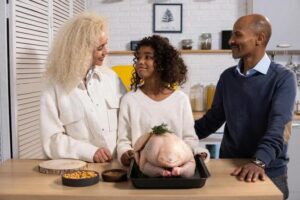
Share family stories and traditions:
Cooking is the perfect time to share a bit of family history. Tell them about how your mother or father taught you a secret cookie recipe, or how you used to cook over a wood stove back in the day. Kids love stories, and hearing about your childhood can be fascinating to them. It weaves a sense of tradition and context into the activity.
Maybe the recipe you’re making has been passed down – let them know that, and it will feel extra special. Or flip through an old family recipe book together and pick something to try. These stories make the cooking experience richer and more meaningful.
Keep it fun and lighthearted:
Turn on some upbeat music or the kids’ favorite tunes in the background. Wear matching aprons or silly chef hats. You can even come up with a “team name” for yourselves (“Grandma and Jake: The Cupcake Crew!”).
If the child is getting restless while something bakes, do a little kitchen dance or play “I Spy” with ingredients. By keeping the mood light, you ensure the kitchen remains a happy place, not a stressful one.
Praise the effort, not just the result:
When the dish is done, celebrate it no matter how it turns out. Maybe the cookies spread a little funny or the soup is a tad salty – that’s okay. Focus on the fact that you made something together. Say things like, “I love how you helped me” or “Doesn’t it taste even better because you helped cook it?” This positive reinforcement will make your grandchild feel valued. It’s also a great confidence booster for you as the grandparent – you successfully navigated cooking with kids! The more you do it, the more confident you’ll become in managing multiple tasks and safety while having fun.
Savor the moment (and the meal):
When it’s time to eat, make it a little event. Set the table together, maybe light a candle or put out a fun placemat for the child. Then sit and enjoy the food together. Kids are often excited to eat something they had a hand in making – even picky eaters are more likely to taste a new dish if they helped cook.
Take a bite and compliment what “we” made. This shared meal is the cozy culmination of your teamwork. It reinforces that cooking leads to a reward you can both appreciate.

Finally, remember that the kitchen is just a backdrop for what’s really happening: love and learning. Every stir, every silly flour fight, every “Oops!” and “Yum!” is part of a bonding experience that your grandchildren will remember for years.
These moments in the kitchen can spark a lifelong love of cooking in them and an even deeper love between you.
Cooking Up Memories That Last a Lifetime

My grandkids love making these hard-boiled eggs. They’re a quick option and a mess-free option when they want to cook but don’t have loads of time.
With a warm heart and these safety tips in mind, you’re ready to cook with your grandchildren in a way that is both safe and joyful. Sure, you might end up with a little flour in your hair or some extra dishes to wash, but you’ll also create laughter, pride, and memories money can’t buy. The kitchen is a place where generations can come together – where a grandma’s secret ingredient is love, and a grandchild’s giggle is the sweetest dessert.
Go ahead – tie on those aprons and have fun! By emphasizing safety and keeping the experience positive, you’re giving your grandkids a precious gift. They may not remember every recipe you made, but they will remember how it felt to create something with you, hand in hand. Those are the moments that truly matter.
Thank you for being the kind of grandparent who wants to share your time and knowledge. Your confidence will grow with each cooking session, and so will the kids’ skills and self-assurance. So preheat that oven, pull up a stool for the little one, and enjoy every minute of the mess, the learning, and the love.
Happy cooking, and cherish these moments! And if you’re looking for tasty ideas to try out with your grandkids next, be sure to check out my 13 Fun Recipes to Cook with Grandchildren for some inspiration. Here’s to many safe and joyful kitchen adventures ahead!

Cooking with grandkids is one of life’s joys. Check out my Cooking with Family for more ideas.

Written by Appliance Granny – Madlyn is a tech-savvy senior with 30+ years of experience running an IT business. She combines her love of cooking and family with a mission to make kitchens safer, simpler, and more joyful for seniors.
Hello There!

Hi, I’m Madlyn – better known here as Appliance Granny!
I’m an almost-retired, tech-savvy grandmother who ran an IT business for 30+ years. I love family, good food, and any gadget with an On–Off switch. I also know first-hand how kitchens can get tricky as we age: heavy pots, hot handles, tiny buttons, confusing settings.
My goal is simple:
Help seniors create safer, smarter, more joyful kitchens.
On this site you’ll find practical tips, step-by-step guides, and senior-friendly product picks—always written from lived experience, clear research, and a friendly Granny voice.